Skip to content

Praxis means knowledge put into action.Solvo means to solve, release, unbind.PRAXSO is where the two meet.

Stopimportant workwaiting ona few people.

We capture how your experts actually decide — the rules, exceptions and approvals — and build governed AI workflows your team can run, check and stop. Start with one workflow and get a clear decision in weeks.

Turn expertise into action.

Better inputs.Better software.

Agents have made software faster to build. They have not made complex work easier to understand.

The challenge is capturing how people actually work: the rules, exceptions, decisions, and context that rarely make it into a traditional requirements document.

That is where PRAXSO starts.

How to start

Start with one workflow. Decide with evidence.

Most clients begin with a single consequential workflow: one that waits on a few experts, breaks between teams, or is about to be handed to an AI system. Every first engagement has a fixed scope and a fixed fee agreed before work starts, and it is useful on its own, whether or not you continue.

  • 01Typically 2–3 weeks · Fixed fee

    Workflow Assessment

    For when you know where the work is stuck, but not yet what should be built.

    You get

    • A map of how the workflow actually runs: rules, exceptions, decision rights and handoffs, in your experts’ terms
    • The contradictions and missing decisions we found, and who needs to resolve each one
    • A recommendation to build, re-scope or stop, with the evidence behind it
    • If the answer is build: a scoped pilot plan you can start on, with us or without us

    First milestone

    A draft workflow map for your experts to correct, at the end of the first week.

  • 02Typically 4–6 weeks · Fixed fee

    Governed Pilot

    For when the workflow and its owner are clear, and you want to see it run.

    You get

    • A working workflow, run by people and agents against one agreed source of truth
    • Evaluations against your real cases, including the exceptions
    • Written limits: what the system may do, what needs a person, and how to stop or reverse it
    • A rollout decision with the evidence behind it: expand, adjust or stop

    First milestone

    The cases we will test against and the limits we will enforce, agreed in writing at the end of the first week.

    Going to production depends on your security review, permissions and operational readiness. We plan for those from the first week; we don’t assume them.

Already scoped?

If the problem, the owner and the measure of success are already defined, we can go straight to a delivery sprint or platform work. Tell us what exists, and we’ll tell you honestly whether that’s the right start.

What your team contributes

  • One owner who can make decisions about the workflow
  • Time with the people who do the work — mostly in the first week, then short reviews
  • Real examples: cases, documents and the systems involved, or a safe copy of them
  • Someone who can approve access and security

Every engagement is shaped to your team, so the time it takes differs. We agree it with you before work starts. We work remotely, and take on work in the US and the UK.

What happens after you get in touch

  1. A reply within one business day

    From a senior member of the PRAXSO team.

  2. A short call

    About the workflow, the people involved, your constraints and timing. No preparation needed.

  3. A written scope, if there’s a fit

    The first engagement, what it produces, the fee and a start date. If there isn’t a fit, we’ll say so.

  4. Your first reviewable artifact

    In the first week of the engagement.

Fees are fixed and agreed before work starts. We’ll give you a range on our first call.

Selected work

Work

Each system below is in development. Stage labels show where it stands today; outcomes describe what it is being built to achieve, not measured results. Naming an organization does not imply its endorsement.

  • 01INDUCT

    U.S. MARINE CORPS · RECRUITING

    Stage: In development

    Give recruiters more time to recruit.

    Induct is a next-generation recruiting platform being built to replace a deeply entrenched system that has served Marine recruiters for roughly two decades.

    It modernizes the recruiting workflow, reduces administrative burden, and gives recruiters better tools to manage candidates.

    Intended outcome

    More time recruiting. Less time managing the process.

    A twin-rotor military transport helicopter making a low water drop over a lake at dusk, silhouetted against a golden sky, with a crew member visible in the open cargo door.
  • 02AMA

    EDUCATION · AI FLUENCY

    Stage: In development

    Prepare learners for the world they are entering.

    AMA addresses a growing contradiction: educators remain cautious about AI while employers increasingly expect graduates to use it fluently.

    AMA combines AI fluency with durable knowledge—using AI to deepen understanding without outsourcing the thinking.

    Intended outcome

    Know more. Understand more. Do more with what you know.

    A stylised illustration of a circular AI network diagram of connected nodes and a globe above a campus building, with four students gathered around a laptop and open books in the foreground.
  • 03DIGITAL TWIN

    MANAGEMENT CONSULTING · EXPERTISE AT SCALE

    Stage: In development

    Put expert judgment to work at scale.

    Digital Twin is an AI-native system being built for Creative Performance Inc. to capture the expertise of senior leaders across operations, finance, media, and ERP.

    It turns CPI’s experience across more than 100 clients into a shared system the broader team can use to deliver work faster, more consistently, and with greater precision.

    Intended outcome

    More expertise in every engagement. Better delivery. Better economics.

    Two craft-material paths on a light blue ground: a red circle connected to a red triangle by a taut straight string, and a yellow circle connected to a yellow triangle by a tangled string that only straightens at the end.

We hold our own agents to the same limits.See how we publish

Methodology

The PRAXSO Method

Understand the work before building the software.

End users do not think in requirements documents.

Our proprietary methodology captures how the work actually happens and turns it into a precise source of truth that human engineers and AI agents can build from.

  1. 01

    Extract

    Understand how the work actually happens.

    Capture the workflows, rules, decisions, exceptions, and knowledge that matter.

    You review

    Workflow map — How the work actually runs, in your experts’ terms.

  2. 02

    Resolve

    Remove ambiguity before it becomes software.

    Identify contradictions, missing decisions, assumptions, and edge cases while the right people are still involved.

    You review

    Decision log — Contradictions, open decisions, and who owns each one.

  3. 03

    Structure

    Turn understanding into executable requirements.

    Create a precise representation of what the system must do, why it must do it, and how success will be measured.

    You review

    Source of truth — Executable requirements, acceptance cases, and success measures.

  4. 04

    Build

    Put that understanding directly into development.

    Use senior engineers and AI agents against the same source of truth to move quickly from requirements to working software.

    You review

    Working software — Shown on real cases early, in an environment you approve.

  5. 05

    Test & Harden

    Prove it works under real conditions.

    Test against requirements, edge cases, failure modes, security needs, and operational conditions.

    You review

    Evaluation and control report — Results against cases and failure modes, permissions, and how to stop or roll back.

An assessment covers Extract, Resolve and Structure. A pilot runs one workflow through all five.

FAQ

From question to delivery

  1. 01

    What kinds of problems are a good fit for PRAXSO?

    The ones where the work is difficult to explain before it is difficult to build.

    Complex workflows. Entrenched systems. Critical decisions. Large amounts of institutional knowledge. Processes full of rules, exceptions, and judgment that conventional software has struggled to capture.

    We start by understanding that complexity and determining what should actually be built.

  2. 02

    How is PRAXSO different from a traditional software development firm or systems integrator?

    We focus on the part of software development where the most information is usually lost: the translation between the people who know the work and the people—or agents—building the system.

    Our proprietary methodology captures how the work actually happens, resolves ambiguity, and converts that understanding into a structured source of truth that human engineers and AI agents can build and validate against. That lets us use modern agentic development for what it is exceptionally good at—speed and leverage—without asking it to guess what the user meant.

  3. 03

    How do you manage the risk of using AI in important systems?

    By deciding deliberately where AI should—and should not—have authority.

    We design permissions, human decision points, auditability, testing, and failure handling around the risk of the specific system. High-consequence decisions can remain human-controlled while agents handle the work they can perform safely and reliably. Before production, we test and harden against the requirements, edge cases, failure modes, security needs, and operational conditions.

    Read how we think about authority.

  4. 04

    How do you capture requirements from users who do not know how to specify software?

    We do not ask end users to become software architects. We ask them to show us the work.

    We capture the workflows, decisions, rules, exceptions, dependencies, workarounds, and institutional knowledge behind what they do. We then resolve contradictions and missing decisions with the people who understand the work before turning that knowledge into executable requirements. The result is a source of truth the user can recognize and the development system can act on.

  5. 05

    What does a first engagement with PRAXSO look like?

    Bring us the problem. You do not need to bring us a finished specification.

    Most clients start with a Workflow Assessment, typically two to three weeks, or — when the workflow and its owner are already clear — a Governed Pilot, typically four to six weeks. Both have a fixed scope and fee, and both end with a decision backed by evidence: build, re-scope, expand, or stop. If the problem is already well defined, we can go straight to build.

    From there, engineers and agents build against the same source of truth, working software gets in front of users early, and what we learn is fed back into the requirements — through validation, testing, and hardening until the system is ready for the environment it is intended to serve.

  6. 06

    Do we have to commit to a long engagement?

    No. Each first engagement stands on its own.

    You keep everything it produces: the workflow map, the decision log, the source of truth, and the recommendation. You can continue with us, take the work elsewhere, or stop — and if the right answer is to stop, we will say so.

  7. 07

    What does it cost, and what do you need from our team?

    A fixed fee, agreed before work starts, and time with the people who know the work.

    We give you a range on the first call and an exact fee in a short written scope. From your side, we need one owner who can make decisions, time with the people who do the work — mostly in the first week — real examples, and someone who can approve access. Every engagement is shaped to your team, so we agree the time it takes with you up front.

  8. 08

    Do you work with consulting firms?

    Yes — inside your engagement, alongside your team.

    If your clients are asking for AI work and you need senior delivery capacity to meet that demand, we can work as part of your team. You keep the client relationship; we bring the method, the engineering, and the controls.

Team

Leadership

The right people, across the whole translation.

Complex projects fail when context gets lost between the people who know the work and the systems built from it.

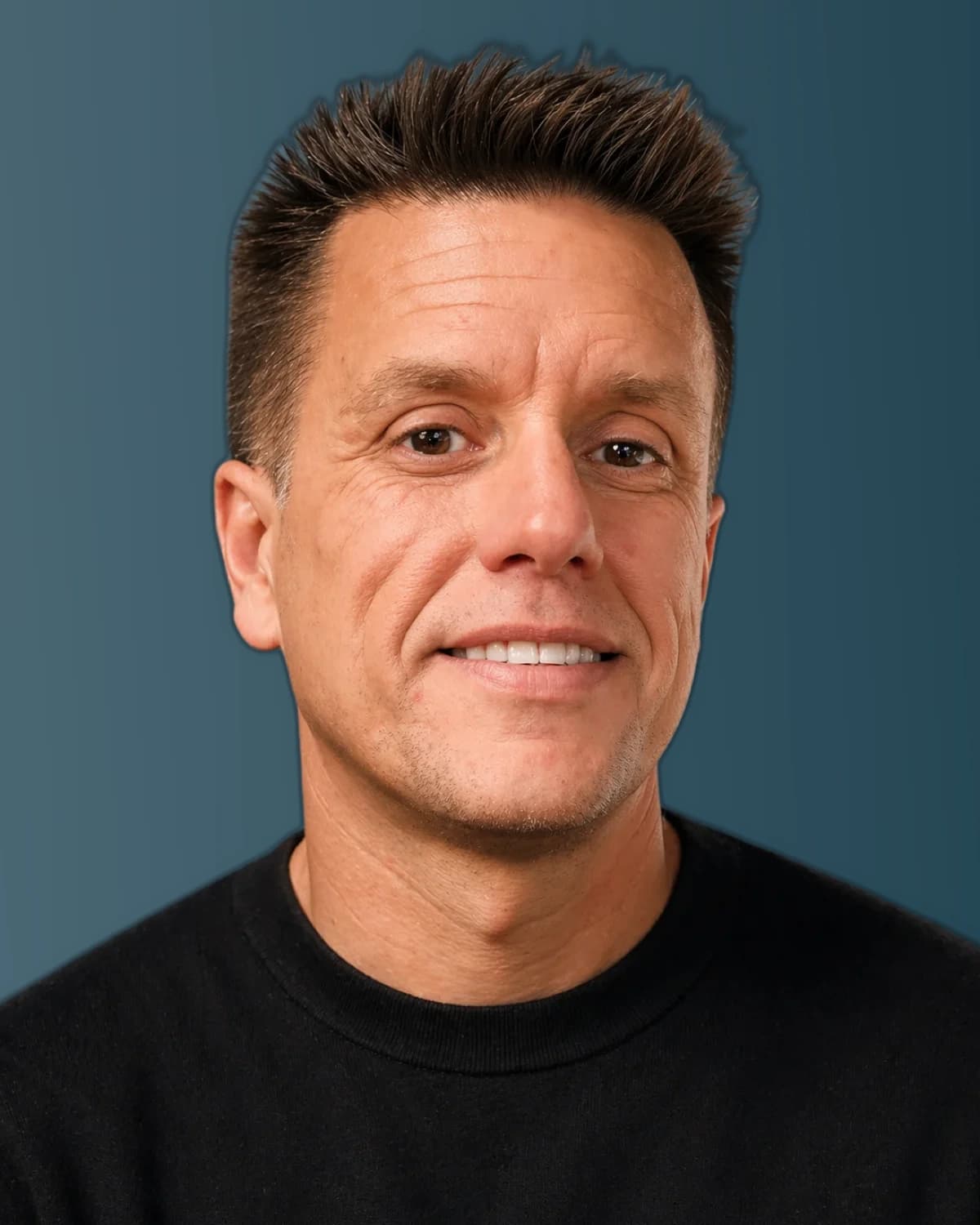
  • Portrait of Zach Lendon, CTO of PRAXSO.

    Zach Lendon

    CTO

    Turns complex requirements into architecture, agentic workflows, production software, and proprietary IP without losing the original intent.

  • Portrait of Vanessa Edwards, CFO and COO of PRAXSO.

    Vanessa Edwards

    CFO & COO

    Captures how the work actually happens, resolves ambiguity, and keeps operational and financial reality intact through final delivery.

  • Portrait of Eric Edwards, CSO of PRAXSO.

    Eric Edwards

    CSO

    Assesses new opportunities for fit, aligns the desired outcome, and guides clients from initial problem through successful onboarding.

  • Portrait of Michael Beckwith, Recruiting SME at PRAXSO.

    Michael Beckwith

    Recruiting SME

    Brings deep recruiting experience to Induct, translating frontline realities into a precise source of truth grounded in how recruiters work.

  • Portrait of Nathan Stahlman, Strategic Advisor at PRAXSO.

    Nathan Stahlman

    Strategic Advisor · Logistics & Training

    Serial entrepreneur and senior executive with an enterprise exit to a leading fleet risk and compliance company, bringing operator perspective to logistics, training, and technology strategy.

For consulting firms

Senior AI delivery, alongside your team.

If your clients are asking for AI work and you need senior delivery capacity to meet that demand, we can work inside your engagement, beside your team. You keep the client relationship. We bring the method, the engineering and the controls — and we tell you plainly what we can staff, and when.

If the work is complicated, start there.

We understand it.We make it precise.Then we build.

Make the impossible practical.